


Purpose
To offer companionship and conversation in a stress-free natural environment that promotes self-reflection and self-understanding, with the goal being to reduce loneliness and alleviate general anxiety along with feelings of futility and powerlessness. Also to wrestle with that one thing we find hard to put our finger on: fear of the future. Our walks are themselves symbolic of the inner path you follow as you journey toward your goals.
Practice
The initial sesson consists of a starter conversation during which we discuss your concerns and goals then move toward creating a treatment plan with these goals in mind. The greater part of this initial session however, is mutual assessment: we have to decide if we want to work together. Character and temperament play the largest role in therapy so it matters that we “mesh.” I am not right for everyone and not everyone is right for me (I too have my mental health to consider). If we agree to work together, then we meet once weekly, more if you like, until we are satisfied with your progress or decide to end our Walk & Talk therapy. Sessions themselves are fifty minutes walk & talk, with an additional ten for me to write up my notes. You may participate in the note writeup (in fact, I encourage it); only, we will not be walking while writing.
Proof
When speaking of goals, the entire goal of walking and talking is to make you feel more at home in both yourself and in the world. It is also to give you a sense that you matter. More practically, the goal is to reduce anxiety and related ailments and develop enduring mechanisms that make your interactions with self and world easier. We do this together, on the understanding that as human beings, we are in this together. The proof is that you “get better.” Talking, after all, is more than just a way to exchange facts; it is the bridge that connects us to each other and helps us process our internal world.
Where & When
My area of service is Saratoga County and Washington County, NY. You are welcome to come from further afield.
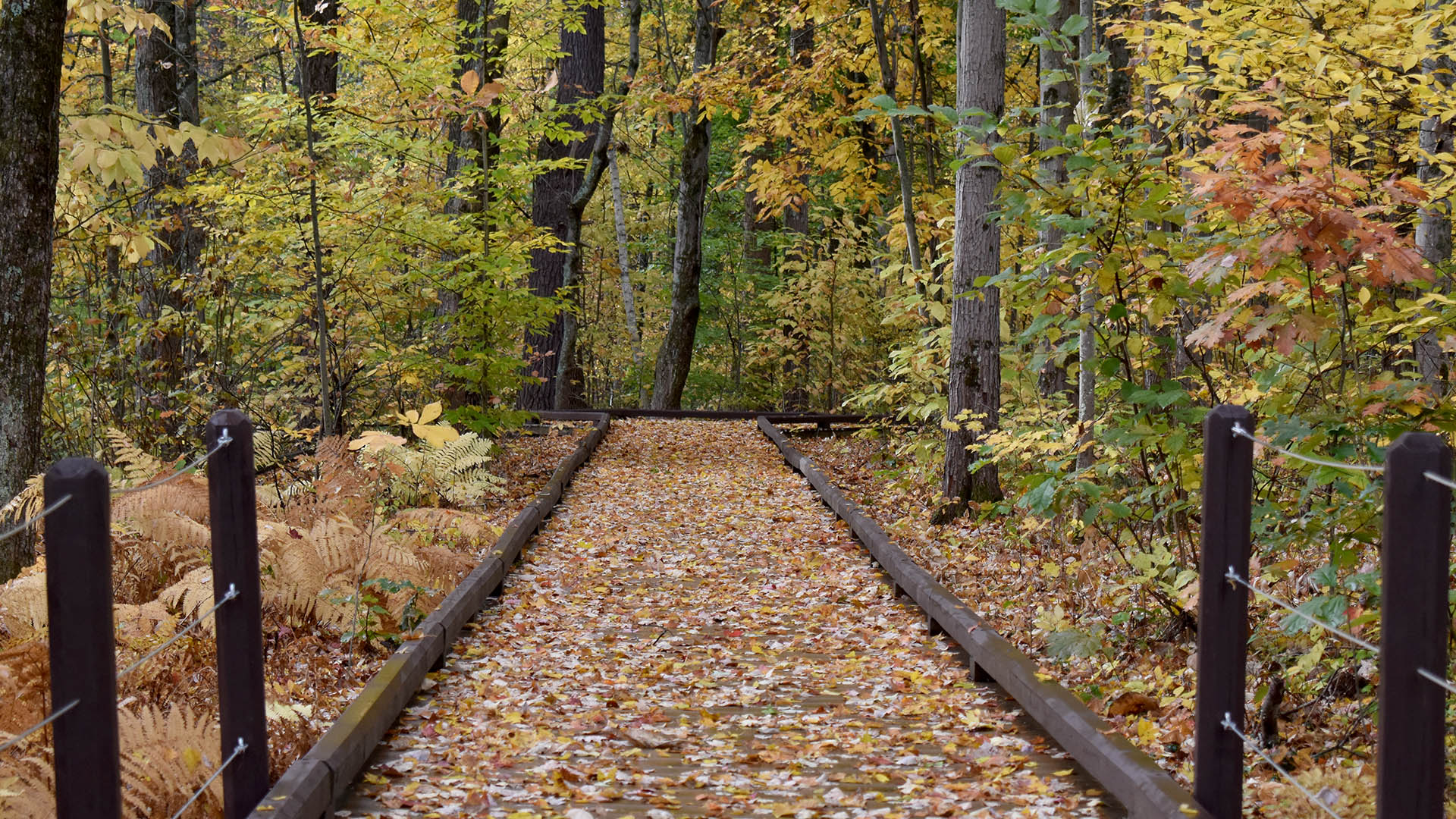
Generally, we meet in the open air, on one of two paths I use for Walking & Talking. One path offers mountain views and a gentle forest walk, the other offers Hudson River and Canal views, including rapids and a waterfall. Both are located near Schuylerville.
These are my favorite walking paths and I encourage you to enjoy them alongside me. However, I am open to walking in your spaces and paths and willing to travel if it will add to your comfort. Please note that there is an additional charge for this.
Yes, we walk in all weather, and at all times. I am available from sunrise to sunset. I am also available Saturdays and Sundays, when there isn’t the hurry of starting your workday or the exhaustion that follows it.
Yes, you may bring your dog to the walking session provided he or she does not become the focus of that session.
In the rare event it is not possible to walk (heavy downpours, snowstorms, excessive cold), you have the option of meeting in my office or we can move the session ahead several days up to a week. If the urge to talk is extreme and weather conditions permit neither walk nor travel, then yes, we can use telehealth. We cannot use telehealth, however, unless we’ve had a number of sessions to allow us to come to know one another. They key value to walk & talk lies in being physically present, not only on the trail, but in company.

Who You Are
Who Walk & Talk is For
These categories are not exclusive but you can see they are “of a kind.” They revolve around one’s sense of self and position in the world, and how the person feels about the relation between the two. These categories are ideal for Walk & Talk Therapy.
- General anxiety and stress
- Fear for or of the future and feeling overwhelmed
- Diminished sense of self, lack of confidence, or low self esteem
- Feelings of futility, including feelings that nothing matters, or “what’s the use”
- Feelings of powerlessness or helplessness, including and especially those stemming from current national politics
- Loneliness, in the sense that nobody understands or wants you or that you simply can’t “connect”
- Heart-sickness in the symbolic or literary sense (if you don’t know what this is then you don’t suffer from it)
- Various life transitions, including graduations, changes in workplace (or how the workplace has changed on you, especially with the arrival of AI)
- Those who need strategies to overcome procrastination
- Those who need strategies to improve interpersonal skills
- Those who need strategies to develop their power of saying “No”
- Those who need strategies to overcome reliance or obsession with social media
- Those who are sick of being marketed to in a hyper-commercialized society (a form of cultural pressure) and need strategies to opt out
- General, human conversation – all topics are on the table, including politics. Because sometimes you just gotta talk
Who Walk & Talk is Not For*
Although I am open to all structured conversations, there are medical conditions that I am not licensed to treat, or that require medication in conjunction with therapy. Also, like any human being who has preferences, there are a small handful of conversations I prefer not to engage in.
- Mental health issues that have been diagnosed as such and often require medication
- Physical Therapy or Physical Rehab
- Nutrional disorders that require diganosing and dietary intervention
- PTSD or related severe trauma from combat, sexual assault, or survivor issues, all of which require psychiatric assistance, often in combination with medication
- Although I wish I could help, I don’t feel I am in a position to deal with certain women’s issues, including life developments such as pregnancy, post-partum adjustments or depression, or perimenopause or menopause
- Those who need life coaching (in the sense of how to be successful professionally and socially)
- Those committed to a doctrinal religion who also want to “share” it, although religiosity/spirituality is fine
*You may request a session, of course, at which time we will determine together whether Walk & Talk is for you, or whether I can help. Most likely, I will refer you to professional colleagues who are better positioned to meet your needs.

Who I Am
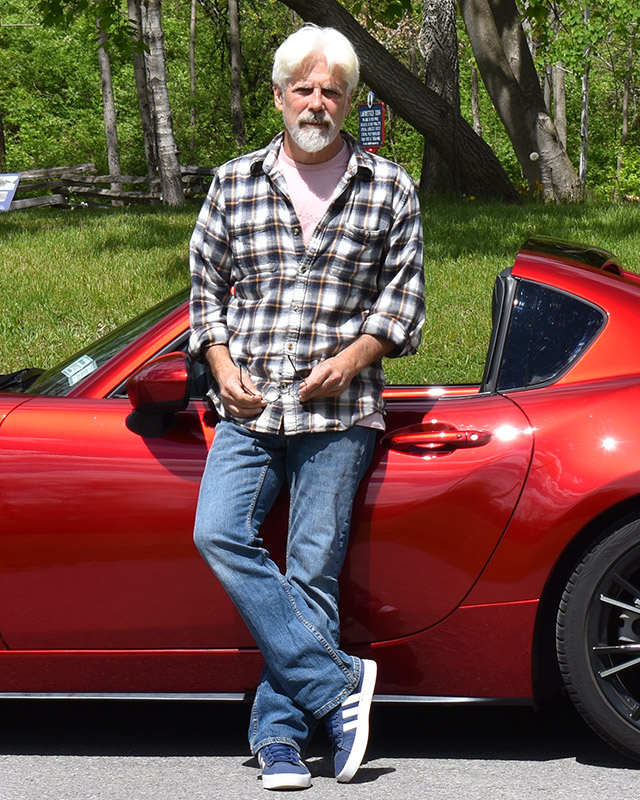
I am an old-school anthropologist who subscribes to the idea of holism as a means of studying and understanding our species, and who believes, as anthropologists before me always have, that there is value to a holistic approach to self and culture. In a world where the sciences increasingly compartmentalize – out of necessity, the body of knowledge is now so large – anthropological holism draws from many disciplines (alongside direct observation) in our attempt to understand self and others. But I am also an Applied Anthropologist. I have never been content with “the view from afar.” And with Applied Anthropology’s tools in hand, I have spent the past three decades using our theories, methods, and findings to solve real-world, practical problems at both the individual and the community level.
Up front I must state that I am not a licensed therapist. I have no interest in becoming a licensed therapist, prefering the broadly analytical anthropological approach over the clinical. Although this approach is strongly Cognitive-Behavioral (CBT), my counseling falls under what used to be called Alternative therapies, and is now called Complementary and Integrative. Does that mean it is ineffective or in some sense new-agey or wishy-washy? Absolutely not. What counts as therapy is too often institutionally defined, the definition then used as a means of controlling the field. For those of a Catholic mindset, for example, their priest is often their therapist, with the Confessional (and counseling in the Parish office) standing in for the licensed therapist’s consulting room. Where I have worked in the Middle East and Turkey, the therapists are often Imams, while those who are licensed as actual therapists with Western training, practice a faith-aligned formula they call tawakkul (trust in God) – which wouldn’t make a whole lot of sense to us in North America. To put this another way: we (patient and therapist) don’t all fit into the same mold, despite our best attempt at institutional definitions. Some of us, if we are to make lasting change, prefer – even need – to operate outside that mold, particularly those of us who experience any kind of crisis in our culture(s).
BA, Psychology, with a minor in Philosophy – Concordia University, Quebec Canada
PhD, Anthropology – Rutgers University, New Jersey USA
Somewhere in between the BA and PhD a philosophical change of heart led to my jumping disciplines out of Psychology into Anthropology. It cost me the first year of my MA, but was more than worth it. Here’s why . . .